
Identify Gwinnett Property Ownership
Build a short trail instead of trusting one screen. The Gwinnett County GIS Data Browser ties an address to its PIN or TAXPIN, the county's parcel keys. From there, the Assessor gives you the tax-account owner. The newest deed indexed by the Clerk of Superior Court shows the recorded conveyance itself. Each office answers a different piece of the puzzle. A name pulled from a single source stays a lead until the parcel number and legal description line up across records.
- Enter the street address in the county GIS or Assessor search and save the PIN, TAXPIN, and situs address.
- Read the Assessor owner field and mailing fields, noting the tax year or download date.
- Search that owner as grantee in the GSCCCA real-estate index and inspect the latest matching deed reference.
- Compare the deed's legal description with the parcel. For an entity, verify its legal name in Georgia's corporation search.
Start from the parcel rather than the person. A common name pulls up Gwinnett parcels that have nothing to do with your target. An address can carry a postal city that sits outside the actual city limits. Working from the parcel keeps the property itself at the center of the search. Save the parcel number and the legal description early. Those two details prevent both mix-ups at once.
Read Gwinnett Owner Fields
The county parcel layer shows OWNER1 and OWNER2 fields. It also carries location and mailing addresses, legal acreage, zoning, values, and deed references. Those labels help when the Assessor portal is down. Still, the map is not a title record. The owner of record reflects whatever the county data carried into the layer. It can lag behind a fresh filing.
Gwinnett County also posts a quarterly ownership-and-value download. That bulk snapshot is official. It helps when you need to match one owner across many parcels or hold onto a dated result. A field or an older snapshot may be missing. In that case, the Assessor page points to Gwinnett Open Records. Request the existing record by parcel and date. Georgia agencies are not required to build a new compilation.
Gwinnett Ownership Source Check
One portal is never the final word on ownership. Combining records gives the strongest answer. The sources here explain why a single lookup can return several names and dates.
| Ownership source | What it contributes | Freshness clue |
|---|---|---|
| Assessor roll | Tax-account owner and mail address | Tax year and update date |
| GIS parcel layer | Owner tied to PIN and map polygon | Frequently updated reference data |
| GSCCCA deed index | Grantee and recorded conveyance | Recording date |
| Quarterly XLSX | Downloadable owner/value snapshot | Quarterly release |
The Gwinnett deeds and land-records office records deeds, plats, liens, and related instruments. Pair that recorded instrument with the matching legal description. That pairing is the real confirmation of ownership.
Gwinnett Parcel Schema View
The official Gwinnett parcel-layer metadata displays the fields available behind the county map.
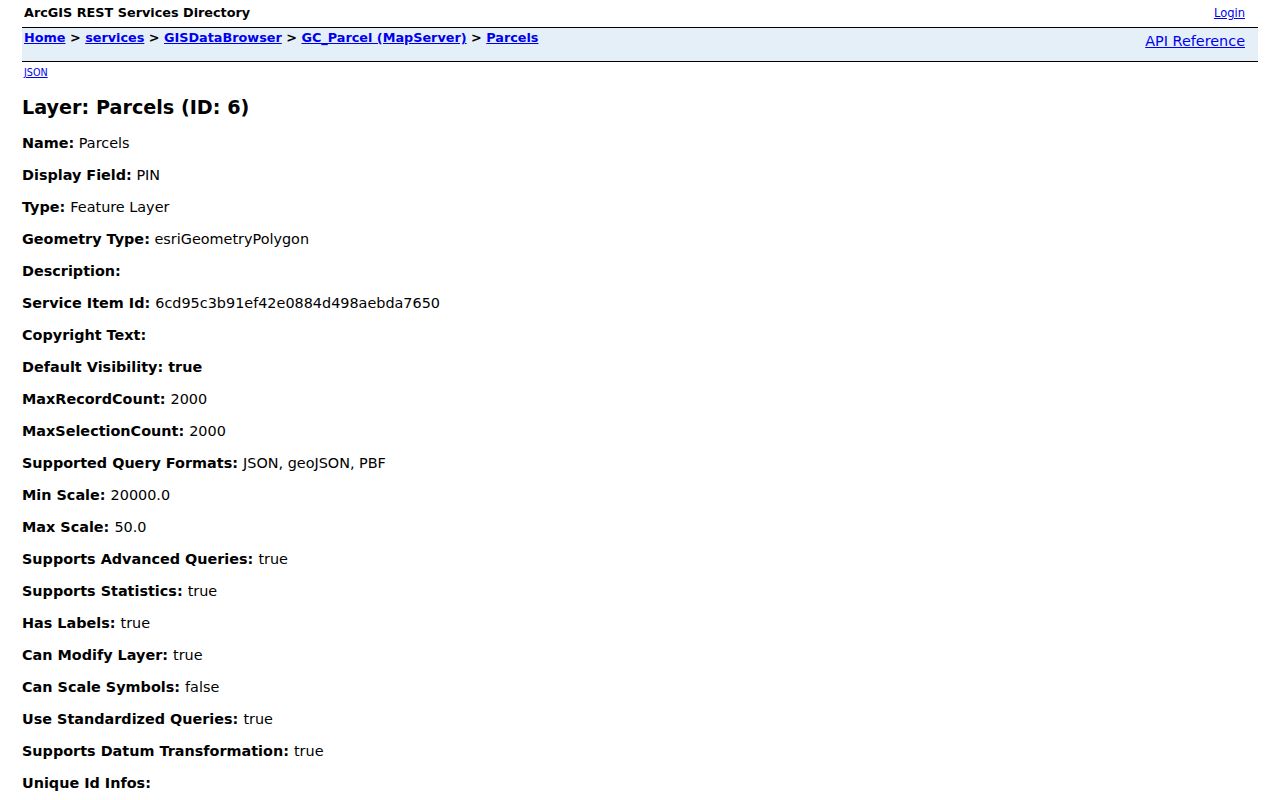
The field list shows how one PIN can bridge owner, address, legal, value, and deed-reference research. The deed still outranks it as a title source.
Trace Gwinnett Deed Confirmation
GSCCCA offers several search paths. They include real-estate name, book and page, property for selected counties, plat, lien, and premium options. For ownership, begin with the Assessor name. Set the search to Gwinnett County. Look for the newest deed naming that party as grantee. A grantee receives the interest; a grantor gives it up. Open the image or order the clerk record. Then read the recording date, parties, deed type, book and page or instrument reference, and land description.
The index only points the way. A security deed records financing, not a move to a new household owner. An assignment or cancellation belongs to the finance trail as well. For copies and instrument detail, the full Gwinnett deed-record process is the better stop.
Decode Gwinnett Ownership Terms
Several labels sound alike but carry different weight in a property-owner search.
- Owner of record
- The party named in the current tax or official ownership record, depending on the source cited.
- Grantee
- The person or entity receiving an interest in a recorded deed.
- Situs address
- The physical property location, which can differ from the owner's mailing address.
- Title
- The legal ownership interest, not merely a name displayed on a tax or GIS screen.
Name the record behind every answer. "GIS owner," "tax-roll owner," and "latest deed grantee" each carry distinct weight. One unlabeled claim carries none.
Resolve Gwinnett Entity Owners
Many Gwinnett parcels list an LLC, trust, or estate instead of a person. Copy the entity name exactly, punctuation and all, and try variants. Georgia's Secretary of State business search can confirm an LLC's control number and registered agent. It also shows the officers and filing history. That filing proves the entity exists. It proves nothing about title. The deed still has to tie the entity to the same land.
Trusts and estates need extra care. A probate file may show executor or administrator authority. A later executor's deed records the actual conveyance. Gwinnett Probate estate files are public. Selected files appear through state court services. Larger requests need advance notice. Just because a source is public does not mean private details belong in print.
Handle Blank Gwinnett Results
A blank result never proves an ownerless parcel. Try the parcel number. Try the street number with a shortened street name. Try entity suffix variants, trust names, estate forms, and the other owner's name. Portals also fail sometimes. The county ownership database and GIS parcel fields serve as official fallbacks, with a focused Open Records request behind them.
Gwinnett's systems also split by purpose. A permit or tax bill may carry a name, but neither replaces the deed. Postal city labels cross city boundaries too. Treat these as leads to reconcile, not shortcuts.
Note: Save the source, date, query, PIN, and deed reference so anyone can reproduce the ownership finding.
Distinguish Gwinnett Owner Records
Three Gwinnett County offices split the work of answering that question. The Assessor appraises each property. It also keeps the owner of record current on the tax roll. The Clerk of Court records the deed that actually transferred the interest. GIS links the parcel number to a map. So no single screen tells the whole story.
A mailing address is a contact clue, nothing more. The person living there may not be the owner. A valid owner address can be out of state or protected. Pull only the facts you need for a purchase, a boundary question, or an estate. Or run a property-history search of the Gwinnett County property records.
Limit Gwinnett Owner Conclusions
A name on the tax roll proves ownership, not occupancy. It cannot settle competing title claims or fix a surveyed boundary. Georgia Safe at Home and VoteSafe can shield qualifying addresses from public property records. Treat any mailing address you find as a lead. Never treat it as a safe place to approach someone. Before a sale or a dispute, let a title professional examine the deeds, liens, probate authority, and recorded exceptions. A Gwinnett County property search will not surface these on its own.
Lawful use. Gwinnett County owner records support due diligence, boundary questions, and civic research. Never use them to stalk, harass, threaten, or expose a protected address.