
Begin a Gwinnett Property Search
A Gwinnett County property search opens with one of three facts: the street address, an owner name, or the county parcel key. The address works best for a single known place. An owner search can surface several tax parcels at once, though names often hide behind trusts, estates, or companies. For carrying one result between county systems, nothing beats the PIN and TAXPIN. Keep both handy. The GIS service pairs those labels with the address, owner fields, legal description, zoning, values, and deed references.
Move from broad identification to recorded proof. Each county source answers a different question and updates on its own schedule. A map is not a survey. An index row is not a title opinion.
- Find the address in county GIS or the Assessor search and save the PIN, TAXPIN, situs address, and tax year.
- Compare the owner and mailing fields, then search that owner and any deed reference in GSCCCA.
- Open the deed image and each cited plat, easement, covenant, lien, or prior instrument.
- Check the Tax Commissioner for billing, delinquency, or sale status tied to the same parcel and year.
- Verify city limits, then search the proper county or municipal permit and zoning system.
The full workflow for address, owner, and parcel searches continues in the Gwinnett property search. Save your access date and the exact terms you typed. A blank result can simply mean a spelling slip, an old address, a system change, or a file that must be requested from the office.
Gwinnett Property Records Custodians
Gwinnett County property records are split by function, not gathered in one place. The Clerk of Superior Court records deeds and other legal instruments. The Tax Assessor identifies parcels and sets appraised values. The Tax Commissioner issues the tax bill and collects payments. None of these offices shares a single database. GIS and Planning and Development add map layers on top. Permit evidence sits there too.
Gwinnett Deeds Start in 1871
Gwinnett real estate records that survive begin on September 26, 1871, according to the clerk. A courthouse fire destroyed earlier material. A missing older deed does not mean no transfer occurred. Later deeds may recite a prior owner, plat, road, or land-lot boundary worth chasing.
The GSCCCA search system supports name, book and page, property, plat, lien, and UCC searches. Search the current owner as grantee. Then follow each prior grantor backward. Confirm the recorded image and legal description. The index is only a finding aid. It is never a title opinion.
- Grantor
- The party transferring an interest.
- Grantee
- The party receiving it.
- Plat
- A recorded drawing of lots, streets, easements, or common areas.
- PIN
- The county parcel key linking map and tax data.
Gwinnett Assessment Record Clues
The Assessor identifies and appraises taxable property, mails annual notices, administers exemptions, and handles appeals. County instructions support parcel, owner, and address searches. If direct qPublic access fails, the Assessor landing page, a GIS layer, the quarterly ownership and value file, or an Open Records request are fallbacks.
Read the notice carefully. It separates 100 percent appraised value from 40 percent assessed value. It also lists the parcel identifier, tax district, exemptions, net taxable value, and appeal deadline. It is not the tax bill. Save the tax year, because values change annually.
| Field | Purpose |
|---|---|
| OWNER1 / OWNER2 | Tax-account owner leads |
| LOCADDR | Physical property address |
| MAILADDR | Mailing address, which may differ |
| DWLGVAL1 / LANDVAL1 | Dwelling and land value fields |
| DOC1REF to DOC3REF | Deed leads, not a full chain |
Gwinnett Parcel Layers in Context
The Gwinnett GIS Data Browser serves as the countywide spatial index. It searches addresses, parcels, owners, subdivisions, condo parcels, zoning types, zoning cases, and assessment neighborhoods. Further layers cover floodplain, roads, city limits, utilities, schools, districts, parks, and aerial imagery.
The identify and buffer tools can pinpoint nearby features. Results can be grouped, exported, printed, or shared. Treat any parcel line, road centerline, or easement layer as a lead only. Read the deed, plat, and recorded instrument before drawing a boundary or access conclusion. Review the official GIS Browser page before opening its map tools.
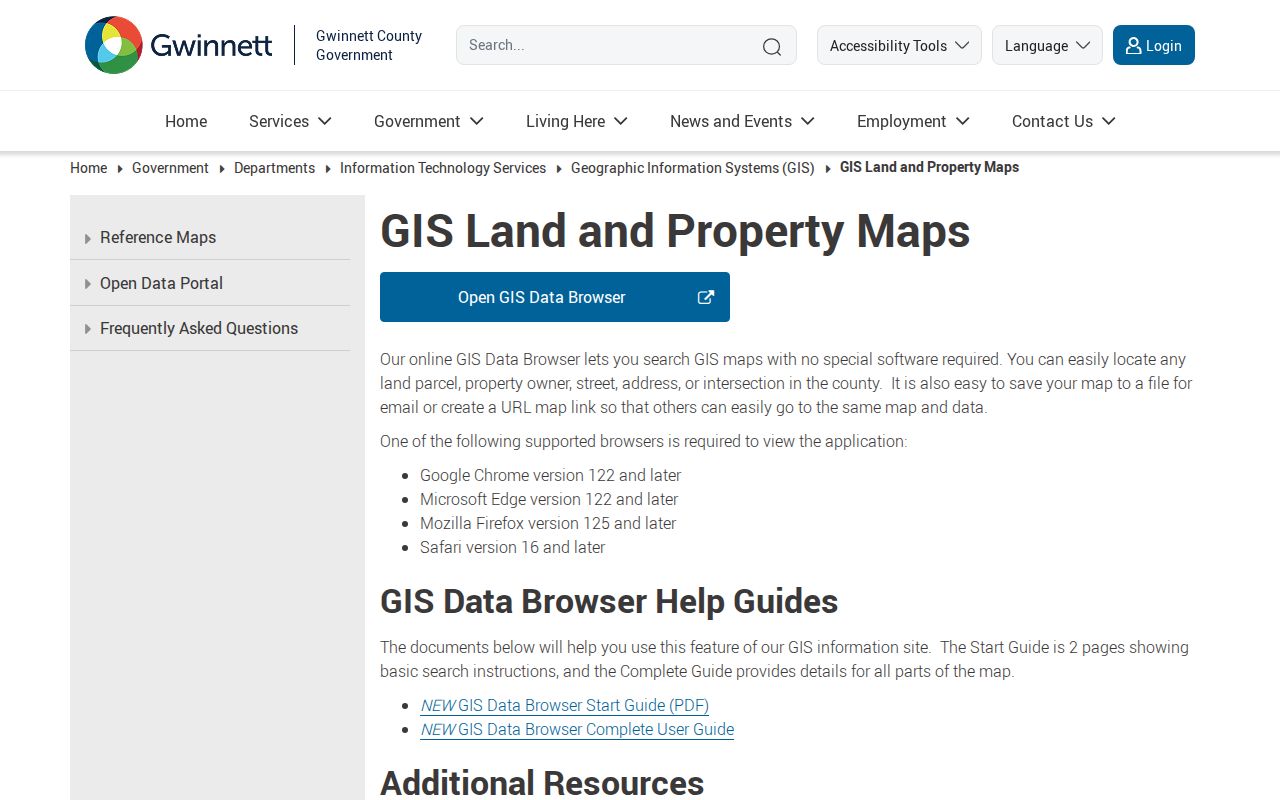
The official browser page links to the county map guide and the current access route. Preserve map scale, layer names, and your access date.
Gwinnett Property Record Sets
No single Gwinnett property record tells the whole story. A deed documents a recorded transfer. A tax roll row links a person or entity to an account. A GIS map supplies reference geometry, a permit shows reviewed work, and court files can explain authority or disputes.
| Record | Question Answered | Custodian | Access Path |
|---|---|---|---|
| Deeds and plats | What instrument was recorded? | Superior Court Clerk | GSCCCA, office, mail, eCertification |
| Assessment | What owner and value does the roll show? | Tax Assessor | Search, GIS, quarterly file, request |
| Tax account | What was billed or delinquent? | Tax Commissioner | View and Pay, office, mail |
| Parcel map | Where is the mapped tax parcel? | GIS/ITS | VertiGIS, REST, Open Data |
| Permits | What work was reviewed? | County or city | ZIP/Accela or municipal portal |
The parcel key is the crosswalk between record sets. Match legal description, record date, instrument reference, and jurisdiction rather than assuming identical street text means identical land.
Gwinnett Tax Sale Timelines
The Tax Commissioner tracks every stage of a delinquent account in Gwinnett County. The trail runs from the tax bill through Fi.Fa., levy, sale, and redemption. The county gives thirty days notice before a Fi.Fa. issues. Sale notices then run four weeks in the Gwinnett Daily Post. The dated results get posted afterward. Record the tax year you are viewing. Partial payment does not necessarily halt a sale. After levy the county requires certified funds in full.
A tax deed is not instant clear title. It also does not create an immediate right to evict anyone. Gwinnett County allows a one-year redemption window, with a 20 percent premium plus later taxes tacked on. Treat the bill, the notice, the sale, the deed, and any redemption as separate events in the record trail. Search GSCCCA for the tax deed itself and any instrument recorded after it. Court and lien searches can surface a competing claim. Only the source document and its legal description settle the question.
The posted auction date is a snapshot, never a standing calendar. A parcel can be paid, removed, redeemed, or carried forward. Save the notice date, tax year, parcel number, amounts and costs, sale result, recording reference, and any release. That paper trail beats a copied line from an old advertisement every time.
Gwinnett Permits Split by City
Gwinnett County's Accela portal handles development, fire, utilities, stormwater, addressing, and inspection records. Everything sits in one place. You can search by site address, parcel, case, or project. Weekly county PDFs cover unincorporated Gwinnett plus some public work, though posting lags behind issuance.
Cities run their own systems here. Peachtree Corners uses BS&A, Duluth runs eSuite through Tyler, and Lawrenceville uses LPP. A county fire or utility file can still govern land inside a city limit. A postal city name never equals the municipal boundary. Check the map, then note the issuing office and case date. Open the official development search to see the current fields.
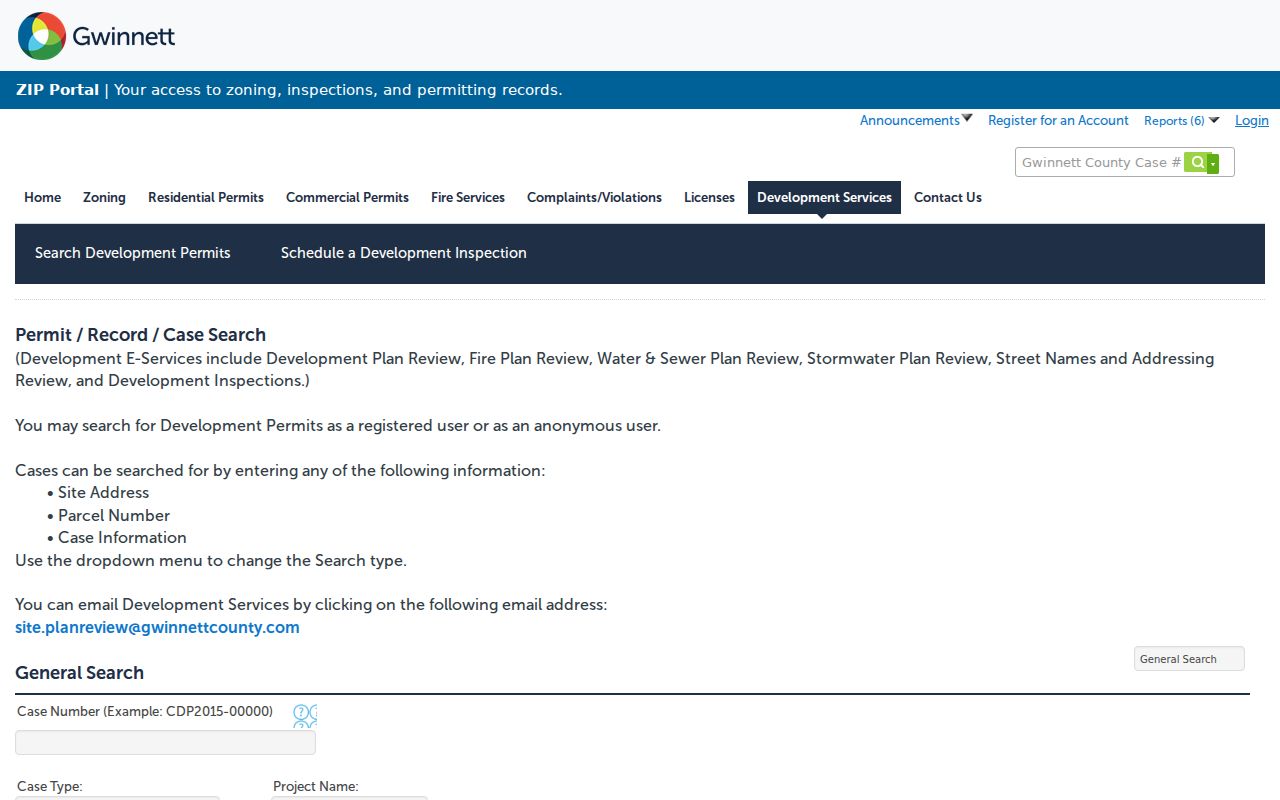
The form itself shows why address and parcel variants cause trouble in a Gwinnett County permit search. A blank result may point to another jurisdiction, a legacy file, or a simple input mismatch.
Gwinnett Courts and Estate Links
Gwinnett County Superior Court cases can carry quiet title actions, partitions, or judgments. Some also involve lis pendens notices. Probate files name the executor or administrator. They may show year's support or authority to sell. Recorder's Court handles some local code and inspection matters. The online case portal does not display every image.
Treat a case result as a lead, then request the actual order or file. For an estate parcel in Gwinnett County, line up the probate file, the authority granted, the deed parties, and the legal description. Then add the assessor PIN. The deed records the conveyance. The probate file explains who had the power to make it.
FANS Watches Gwinnett Filings
GSCCCA offers a free Filing Activity Notification System for Gwinnett County deed records. FANS sends email or text alerts based on a name, address, or book and page. An alert is not a deed copy. It also proves no fraud by itself. Pull the recorded instrument and compare the parcel and legal description before drawing any conclusion.
The system works best once you already know the correct property and its recorded reference. Keep any alert settings private. Keep contact data private too. They belong to the subscriber alone.
Historic Gwinnett Record Bridges
Georgia Archives tax digests reach from 1872 through 2002. Coverage is nearly complete for Gwinnett County. Each digest sorts entries by militia district, then roughly by alphabet. Defaulters, executors, agents, widows, heirs, and Freedmen often appear in special sections of a volume. The Gwinnett Historical Society keeps nineteenth-century court and tax books. It also holds deeds, maps, photos, and city binders. The county library holds newspaper microfilm and census material. Together these collections surface old owners, vanished roads, businesses, estate notices, and land lots.
Begin with the current parcel. Work backward to its land lot, subdivision, old road, or militia district. Search the tax digest alongside a historical map. Then test names against newspaper notices, probate files, and the first surviving deed index. A rural tract may never have carried a modern street name. Later deed recitals and adjacent-owner names can bridge the gap. But log them as evidence rather than assuming they hold.
Historical clues are not recorded title. Label every step as direct, indexed, archival, or inferred. Keep going until the chain reaches a surviving deed, plat, or parcel. That record must be backed by a legal description. Cite the collection, volume, binder, page, and access date. Another researcher can then repeat the path through Gwinnett County property records.
Request Missing Gwinnett Records
The Georgia Open Records Act, O.C.G.A. §§50-18-70 through 50-18-77, opens existing documents, maps, books, and computer data. These records sit in agency work across Gwinnett County. Agencies must generally provide access within three business days. Otherwise they must explain timing, cost, and exemptions in writing. They do not have to build a new report or analysis. A portal error never erases the public record underneath. A missing image can be requested straight from its custodian.
Name the address, PIN, record type, dates, case or instrument. Also name the electronic format you want. For assessment records, ask for existing cards, notices, exemption records, appeal papers, or ownership history. For a permit, request the application, approved plan, inspection entries, certificate, and closure document. For deeds and plats in Gwinnett County, give the book and page or instrument reference. Say whether you need a plain or certified copy.
Reasonable search and redaction charges can apply. The first 15 minutes stay free under state guidance. State guidance also caps paper copies, while electronic media and staff time may add cost. Ask for an estimate, set a ceiling, and request the native electronic format when possible. A narrow request is simplest to route, price, and reproduce.
Limits of Gwinnett Property Records
Gwinnett property records can answer many questions about a parcel. A deed names the owner of record. The tax roll lists an assessed value, the GIS map draws the parcel, and court files may show liens or permits. Still, no single record tells the whole story. Records cannot confirm who lives at a property, guarantee clear title, fix a surveyed boundary, or predict a sale price, and zoning or flood findings live elsewhere. Because each document was made for its own purpose on its own date, files sometimes disagree with one another.
Privacy programs shape what the records leave out. Safe at Home can mask an eligible participant's address. VoteSafe shields qualifying voter addresses the same way. Sealed court matters, vital-record limits, and protected medical, financial, victim, minor, and public-worker fields add further boundaries. Never rebuild a withheld address from other sources.
Lawful use. Gwinnett property records support purchase diligence, tax review, boundary research, estate work, and civic transparency. They do not replace a title search or survey, and owner data must never be used to stalk or harass anyone.